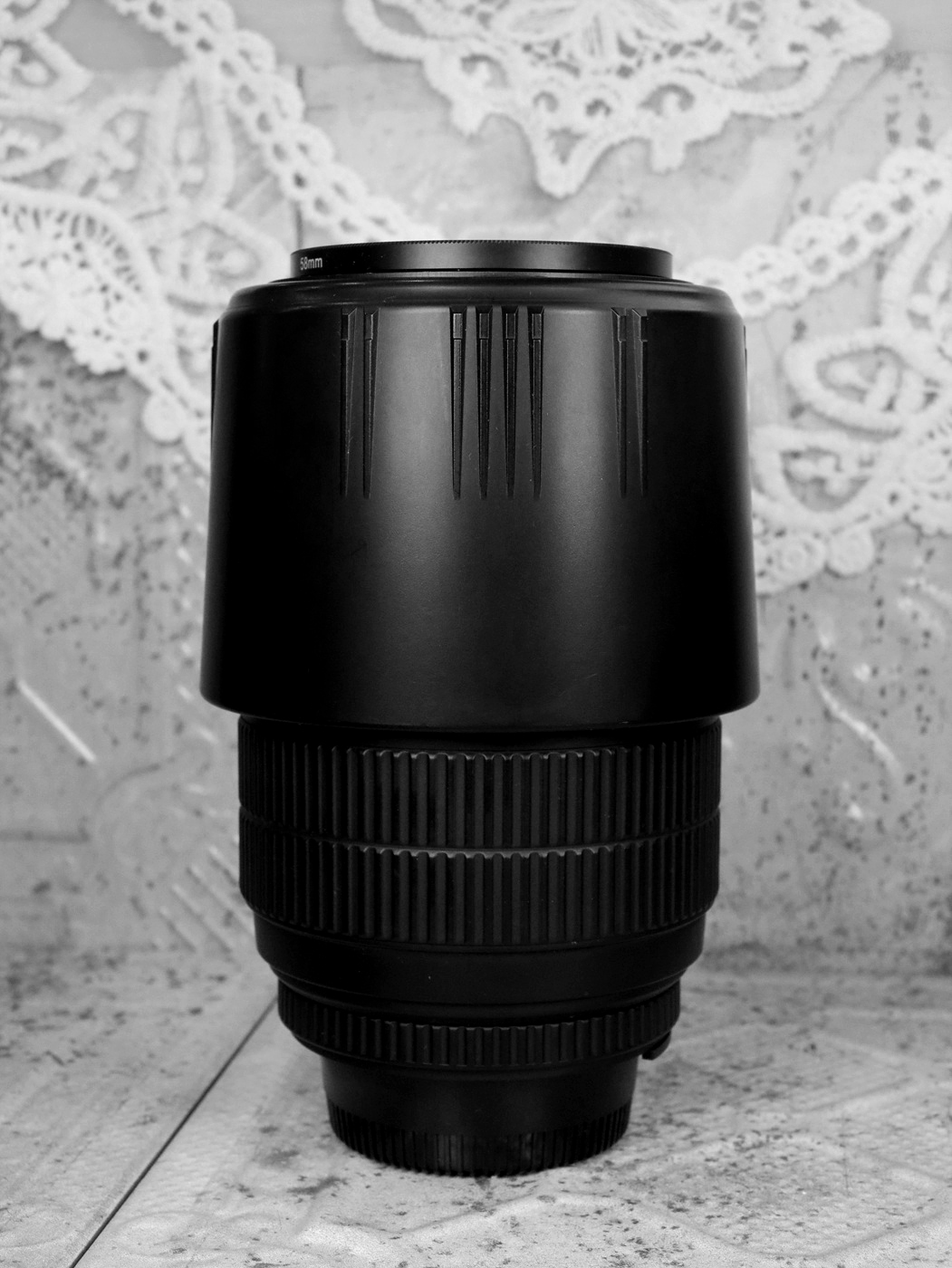
The Sigma 70-300mm 1: 4-5.6 is an old telephoto lens from Sigma.
이 시그마 렌즈는 오래된 망원 줌 렌즈다.
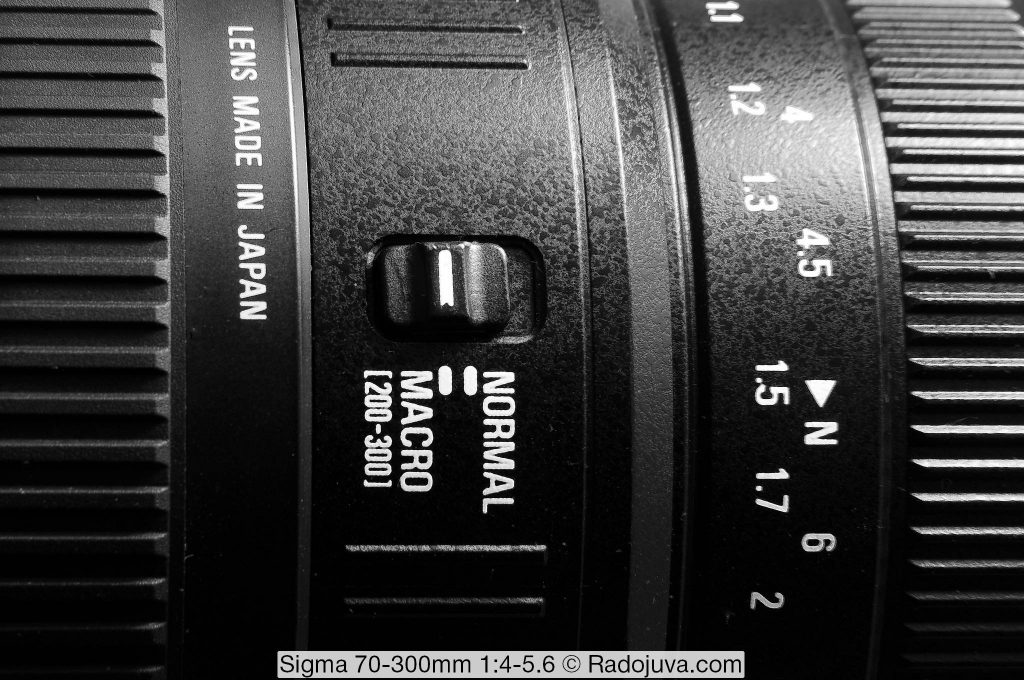
small switch 'NORMAL || MACRO (200-300) '
macro mode works in the range of 200-300 mm focal length
lack of a decorative ring on the focus ring
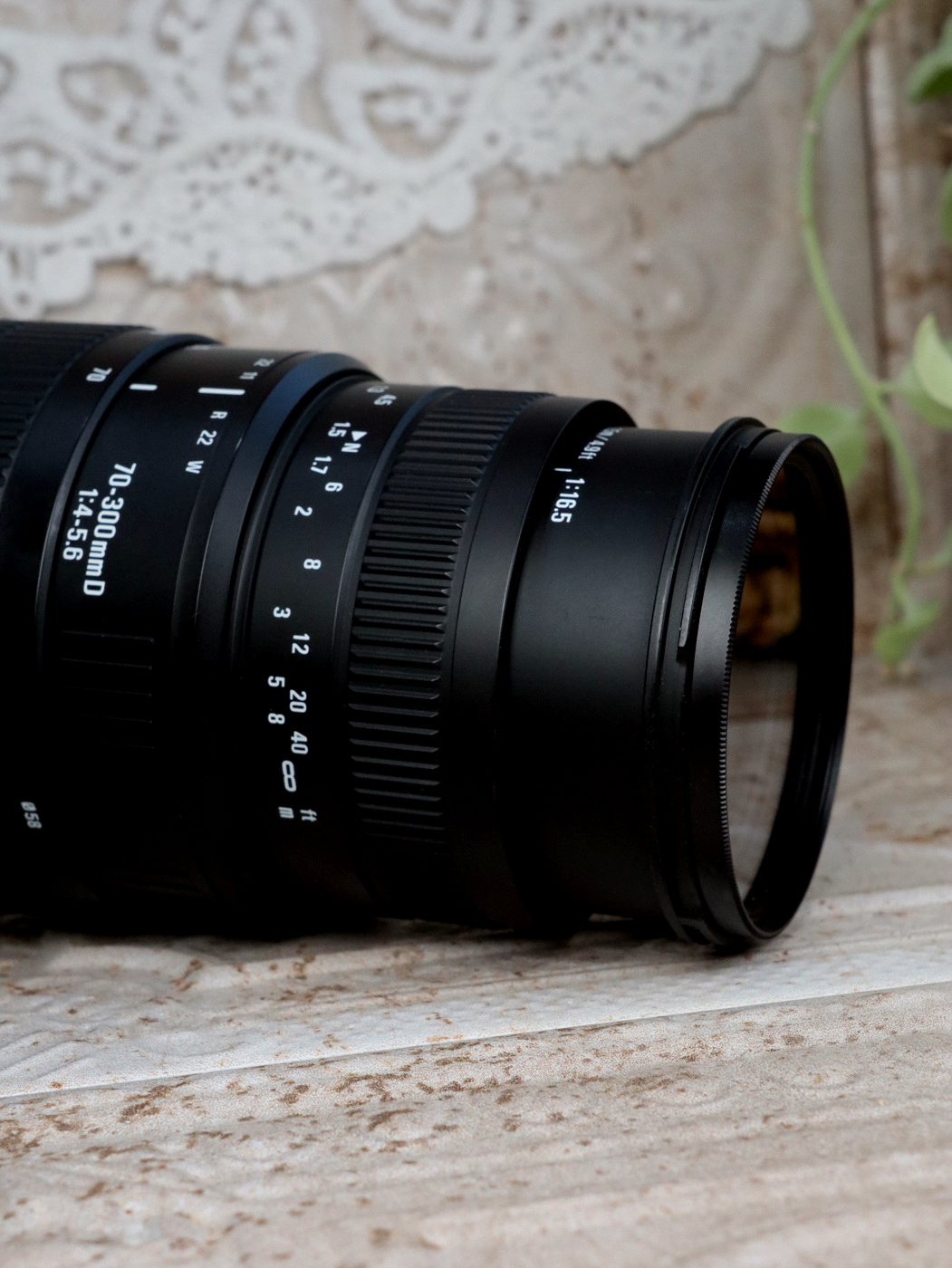
thin focus ring (smaller than the zoom ring)
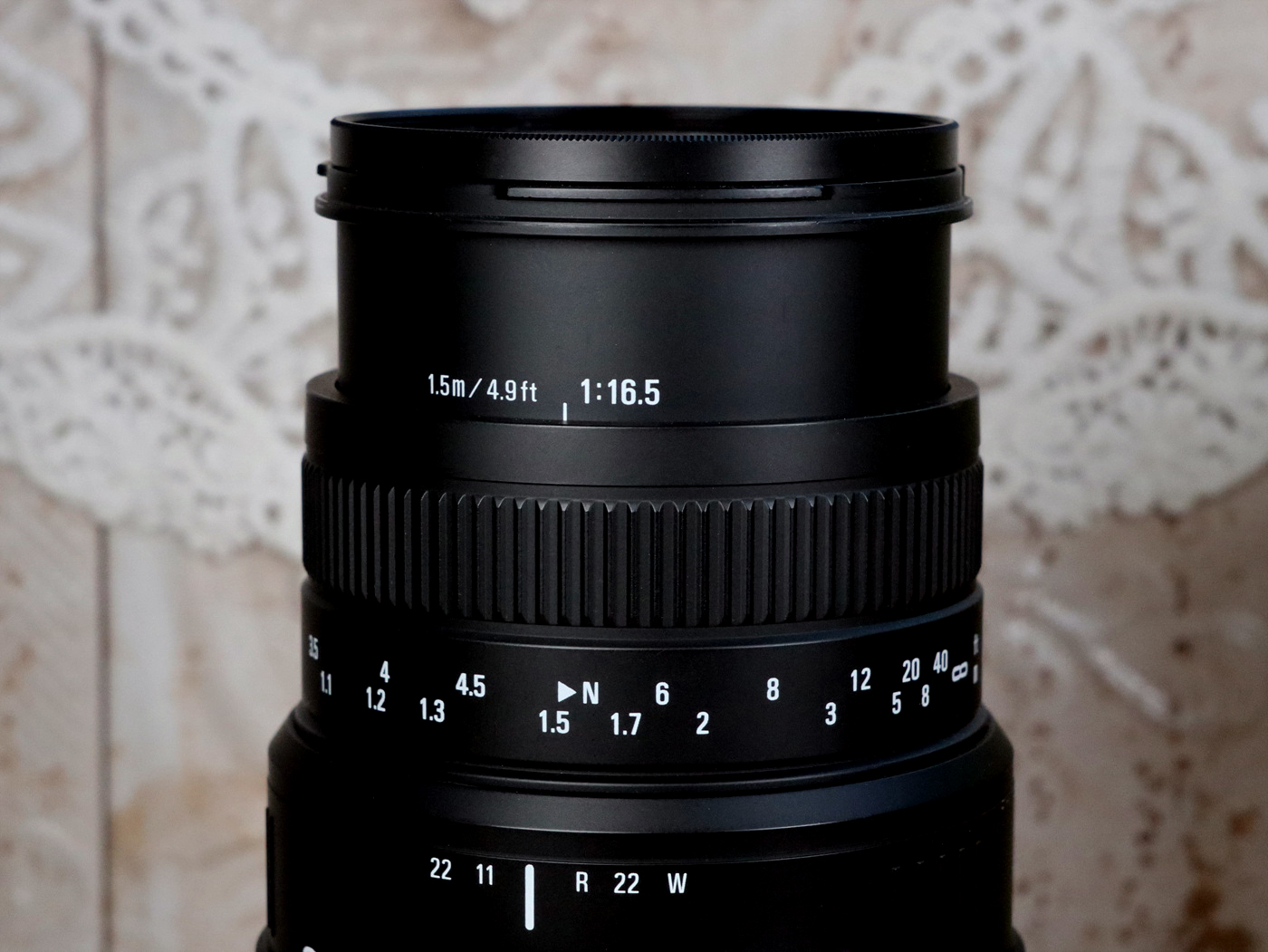
marker 'N' near the value of 1.5 meters
does not reach the APO versions optically
작은 스위치 'NORMAL || MACRO (200-300)'
매크로 모드는 초점 거리 200-300mm 범위에서 작동한다.
초점 링에 장식 링이 없다.
얇은 초점 링(줌 링보다 작음).
1.5m 값에 가까운 'N' 표시.
광학적으로 APO 버전에 미치지 못한다.
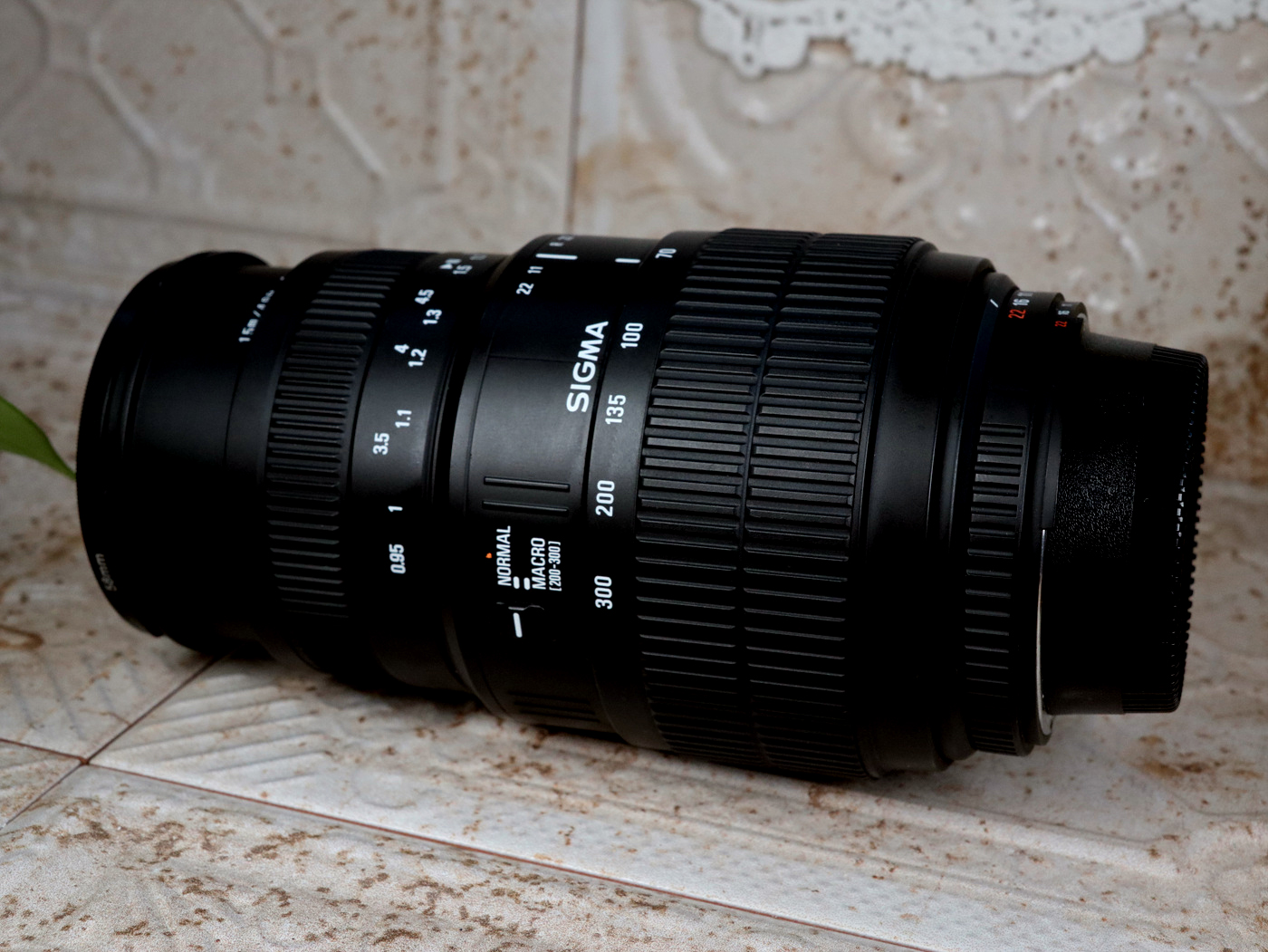
시그마 70-300mm 1:4-5.6은 매크로 촬영 모드,
저렴한 가격임에도 뛰어난 화질로 많은 관심을 받았다.

한 외국인이 1만원에 판매하는 것을 가져오게 되었다.
1만원에 이 정도 렌즈는 축복이다.
별 기대도 하지 않았지만 상태는 아주 깨끗했고,
촬영 결과물들은 생각했던 수준보다 뛰어나고 만족도가 높았다.
Main technical characteristics of Sigma 70-300mm 1: 4-5.6:
| Review Instance Name | Sigma 70-300mm 1: 4-5.6 LENS MADE IN JAPAN 1159764 Ø58 inscription |
| Basic properties |
|
| Front Filter Diameter | 58 mm |
| Focal length | 70-300 mm
|
| Zoom ratio | 4.26 x |
| Designed by | for full-format SLR cameras (produced in versions for different systems) |
| Number of aperture blades | 9 straight petals |
| Tags |
|
| Diaphragm |
|
| MDF (minimum focusing distance) |
|
| The weight | approximately 600 grams |
| Optical design | 14 elements in 10 groups Presumably, one super dispersion element Super Low Dispersion is used (shown in blue) |
| Lens hood | bayonet mount, model Sigma LH 635-01 |
| Manufacturer country | LENS MADE IN JAPAN (Japan) |
| Price | Prices for modern Sigma telephoto lenses can be viewed here. |
In the review I have visited many versions of Sigma 70-300 lenses, the latest version is the best - Sigma DG OS 70-300mm 1: 4-5.6.

여간해서는 사이즈가 큰 풀프레임 dslr을 들고 밖으로 나가지 않지만 이 렌즈를 사용하기 위해서 들고 나갔다.
의외로 큰 부담이 없었고 이 렌즈로 촬영하는 시간들은 즐겁고 재미있었다.
아래는 촬영의 일부만 올린 사진들이다.







Assembly
Sigma 70-300mm 1: 4-5.6 is assembled not bad, but, as for me, the Normal / Macro switch (200-300) is too flimsy and can be broken if handled ineptly.
The retractable body frame (trunk) consists of one very long section.
When changing the focal length, the rear lens is movable and can act as an air pump.
A nice feature is the small diameter of the front filter - only 58 mm, the same as that of a whale baby Canon Zoom Lens EF-S 18-55mm 1: 3.5-5.6 IS STM.
The Sigma 70-300mm 1: 4-5.6 came to my review with an original, large and strong plastic hood, which is fixed in special grooves located near the front lens of the objective. When the focal length is changed, the hood moves in conjunction with the movable frame of the body. The hood can be installed in the opposite direction for transportation. In this position, access to the focusing ring is lost in the range of 70-200 mm. With the hood attached, in focus mode 'M', the focusing distance can change under the weight of the hood (the hood pulls the trunk), while the focal length does not change on its own (this may possibly start over time).
Устройство aperture comprises 9 not rounded petals and forms a hole with a regular 9-gon.
Focusing
Auto focus speed average... Focus speed is independent of camera orientation or focal length. The focusing time from MDF to infinity and back in 'Macro (200-300)' mode is long enough for comfortable work.
For focusing, a conventional micro focusing motor is used, which very noisy. The nature of the noise is unpleasant.
The lens does not use internal focus. During focusing, the front lens, together with the frame for the filters, rotates and drives forward. Using polarizing and other specialized filters will be difficult. When changing the focal length, the front lens does not rotate.
Focus ring rotates 90 degrees in 'Normal' mode and 180 degrees in 'Macro (200-300)' mode. The movement of the ring is smooth, but you need to make an effort to break the ring from its place. When the focus ring rotates, there is a feeling of 'plastic on plastic'.
When used on a camera Canon EOS Digital Rebel XSi (aka Canon EOS DIGITAL 450D, aka Canon EOS Kiss with very simple 9-point focusing system) the lens behaves badly. Often mistaken in focusing, often there are twitching of the focus ring. Also on camera Canon EOS DIGITAL 450D the lens behaves poorly in Live View focusing mode - it is inaccurate and takes a long time to aim (theoretically, accuracy with stationary objects should always be perfect). Probably there is trouble with poor compatibility with some cameras. I visited a lot of versions and sub-versions of Sigma 70-300 for Nikon cameras, with which there were no problems with accuracy and tenacity of focus.
Focus Features:
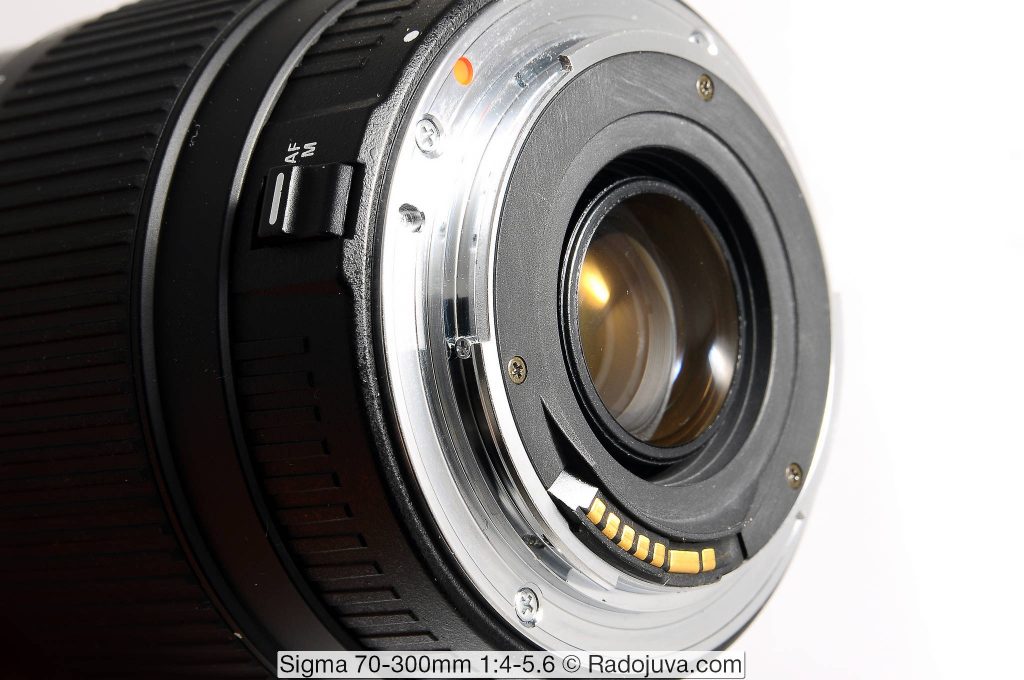
Sigma 70-300mm 1: 4-5.6 has focus mode switch 'AF-M'. To perform manual focus lens required must be in focus mode 'M'. Sigma 70-300mm 1: 4-5.6 does not have the function of continuous manual focus control.
During auto focus focus ring rotates and cannot be touched.
There is a strong effect of 'Focus Breathing' (changing the viewing angle during focusing). During focusing towards the MDF, the viewing angle decreases.
Sigma 70-300mm 1: 4-5.6 - a lens from a third-party manufacturer. It may happen that it will not work correctly with some Canon EOS cameras.
When changing the focal length, focusing is a bit confused.
There is depth of field scale, but only for 70mm focal length (indicated by 'w' mark) and only for values aperture F / 11 and F / 22. There is a label for working in the infrared spectrum.
The lens has scale with focusing distance in meters and feet. Such a scale in itself is of little use and is present more for show (justification of this thought here) The distance scale is plotted on the focus ring, and not made using a special window.
Sigma 70-300mm 1:4-5.6 focuses poorly in live view (tested on Canon EOS Digital Rebel XSi). Problems are associated with long 'run' of the focusing system and inaccurate focusing, even on stationary subjects. Other similar lenses focus much better in Live View.
Unknown compatibility with teleconverters.
Sigma 70-300mm 1: 4-5.6 does not have hard stop (hard infinity mechanical stop) which allows you to accurately and quickly focus the lens at infinity under any external conditions.
There is a special switch for switching to macro mode, which will be discussed below.

Macro mode
Sigma 70-300mm 1: 4-5.6 can use the macro mode, which is activated by a special switch Normal / Macro (200-300). This mode has a number of features:
- it is possible to switch to macro mode only when the focal length is set in the range from 200 to 300 mm. Actually, the inscription 'Macro (200-300)' just gives a hint about this. For example, at a zoom position between 70-200mm, the switch slider cannot be moved, but if force is applied, it can be broken.
- using the zoom ring in the 'Macro (200-300)' mode, the focal length can only be changed in the range of 200-300 mm
- in the 'Normal' mode, focusing is available from 1.5 meters to infinity
- in 'Macro (200-300)' mode, focusing is available from 0.95 meter to infinity
- when the focal length is set from 200 to 300, you can switch to the 'Macro (200-300)' mode at any convenient time and at any focusing distance.
- switching from the 'Macro (200-300)' mode to the 'Normal' mode is possible only if the focusing distance is more than 1.5 meters. There is a '►N' prompt on the focusing distance scale near the 1.5m focusing distance, which says that the focus ring must be rotated beyond this mark to enter the 'Normal' mode. It is possible to break the mode switch if you try to turn on the 'Normal' mode when the focusing distance is set to less than 1.5 meters.
- auto focus works in either 'Normal' or 'Macro (200-300)' modes
- to switch from 'Macro (200-300)' mode to 'Normal' mode, you often have to turn off automatic focus using the 'AF / M' switch, manually move the focusing ring beyond the '►N' mark, then turn on the 'Normal' mode and back to auto focus using the 'AF / M' switch. You can also force the camera to automatically focus beyond the '►N' mark and then switch to the 'Normal' mode. Such manipulations are extremely inconvenient.
- due to the strong effect of 'Focus Breathing' during shooting with a 1: 2 magnification, the actual value of the focal length is in the region of 450 mm.
On the extendable part of the frame of the case there are three scales that are responsible for the magnification:
- scale 1.5 m / 4.9 ft with magnification factor in 'Normal' mode with values: 1: 16.5, 1:12, 1: 8.9, 1: 5.9, 1: 4.1
- scale [200 mm] with magnification factor in 'Macro (200-300)' mode for 200 mm with values: 1: 5, 1: 4.3, 1: 3.6, 1: 2.9
- scale [300 mm] with magnification factor in 'Macro (200-300)' mode for 300 mm with values: 1: 3.5, 1: 3, 1: 2.5, 1: 2
You can quickly get used to the logic of the lens. The ability to shoot macro with a maximum magnification of 1: 2 and support for autofocus is a very strong point of this lens.
해외 포토그래퍼의 개인적인 경험 https://radojuva.com/en/2017/06/sigma-70-300-4-5-6/#intro
My experience
I like these inexpensive televisions, you can squeeze a lot from them, especially if you find a good copy.
On sale Sigma 70-300mm 1: 4-5.6 (such an option, as in the review) can not be found new. I recommend a newer model for use Sigma APO DG 70-300mm 1: 4-5.6, prices for which you can see here.
Comments on this post do not require registration. Anyone can leave a comment.
Sigma 70-300mm 1:4-5.6
Sigma 70-300mm 1:4-5.6

Results
Sigma 70-300mm 1: 4-5.6 is a rather interesting lens (as well as its entire subversion and version).
Main advantages
low cost. Many offers in the secondary market
good maximum magnification ratio for macro shooting, which is 1: 2
the ability to use different focal lengths in macro mode from 200 to 300 mm (macro lenses with zoom are very rare)
normal build quality, small diameter filters, the lens does not change the focal length under its own weight
good image quality
9 not rounded petals aperture, while the lens creates fairly smooth discs of blur
fast enough focusing in 'Normal' focus mode
three scales with a magnification ratio depending on the focal length and focusing distance + scale focusing distance, depth of field mark and shift during infrared shooting
smooth drop of aperture from 70 mm to 300 mm (up to 135 mm F / 4.0 is available, F / 5.6 occurs only at 220 mm)
The main disadvantages
ordinary micro focusing motor instead of an ultrasonic motor (or similar), which use original lenses
frequent focusing errors with the camera Canon EOS DIGITAL 450D, including in Live View, most likely there will be a problem on some other cameras
strong and unpleasant noise during auto focus
inconvenient switch to switch to macro mode (inconvenient to switch to 'Normal' mode, read the details in the section 'Macro mode')
auto focus is not fast enough when shooting in macro mode
rotation of the focus ring during autofocus and, as a result, lack of the function of constant manual focus control
rotation of the front lens and the frame for the filters during focusing (inconvenience when using polarists and other specific filters)
noticeable decrease in resolution with increasing focal length
focus ring plastic, grooved but not rubberized
the weight of the hood can change the focusing distance in focus mode 'M' (the lens trunk is extended)
the zoom ring rotates in the opposite direction (inconvenience for those who have original Canon zoom lenses)
movement of the rear lens while changing the focal length, strong effect of a vacuum cleaner / air pump
strong 'Focus Breathing' effect (changes in viewing angle during focusing)
obsolete model that is difficult to find on sale with a guarantee
there is incompatibility with some cameras and / or teleconverters (no exact data)
'REVIEW > Lenz Review' 카테고리의 다른 글
| Tamron 14-150mm f3.5-5.8 di iii (0) | 2025.10.24 |
|---|---|
| 마운트 어댑터 FTZ ll (0) | 2025.07.03 |
| Nikon 105mm f2.8D AF Micro-Nikkor (0) | 2025.04.25 |
| INDUSTAR - 22. F3,5 /50mm (0) | 2025.02.26 |
| SMC PENTAX-M 135mm f3.5 (0) | 2025.02.24 |


